The U.S. military is adopting more green initiatives aimed at getting the nation’s national defense system in line with climate change mitigation goals.
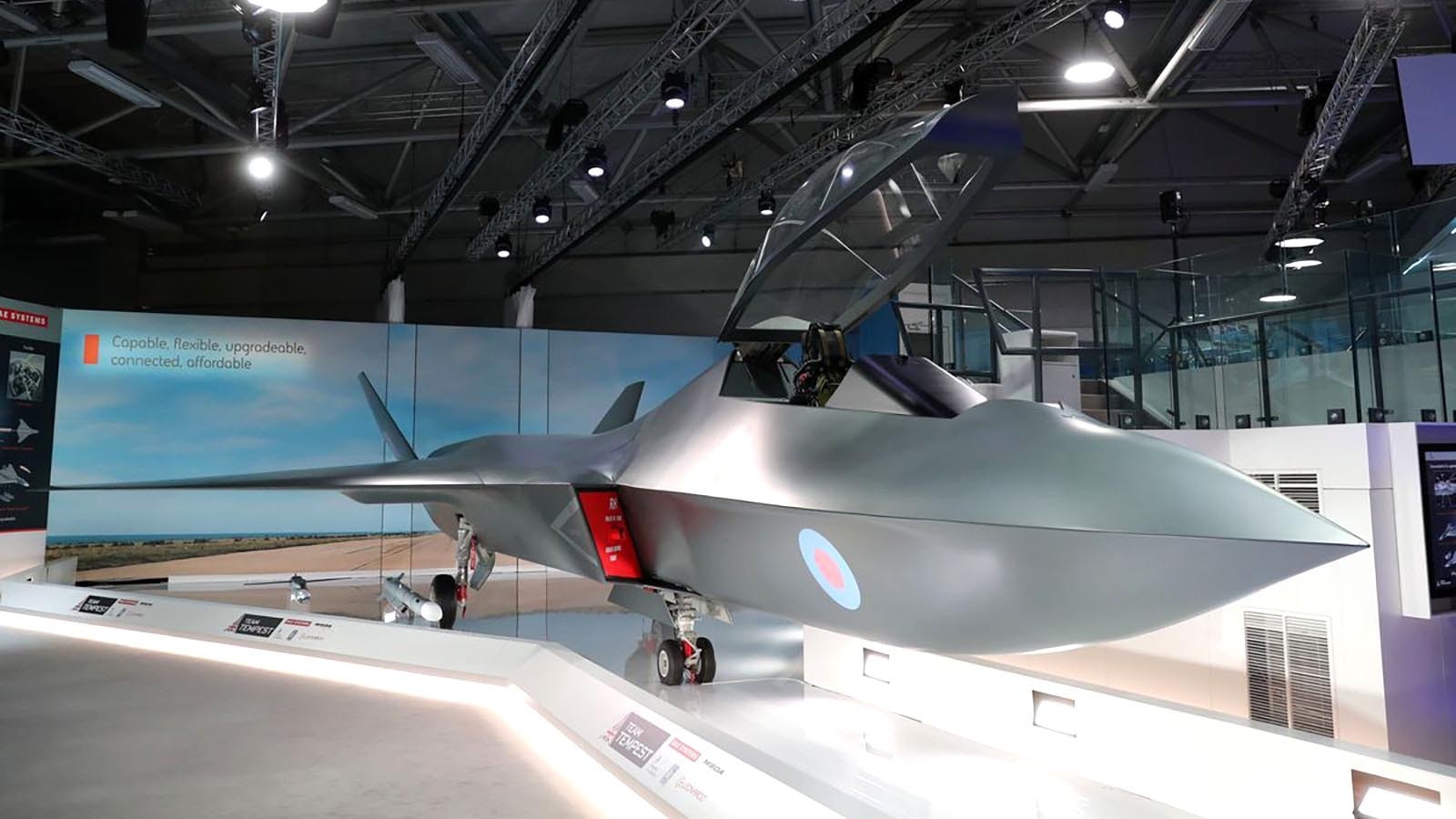
The fiscal 2024 National Defense Authorization Act includes provisions for the development of an electric vertical takeoff and landing vehicle (VTOL). These are fixed-winged aircraft that can hover, takeoff and land vertically, just like a helicopter.
According to sections of the act that the House Armed Forces Committee released, development of the technology would support “mobility and sustainment” in war zones or other “contested environments” during humanitarian operations, distinguished visitor transport and disaster response operations.
The technology will, according to the committee markup of the act, “bolster U.S. national security and economic leadership.”
Other provisions include development of a domestic source of nuclear fuel and microreactors, $500 million for energy-saving projects at U.S. bases in America, South Korea and Kuwait, and money for a report on how wind farms are posing a risk to low-level flight training routes.
Tesla Tanks
This is not the first initiative to electrify America’s armed forces.
In May, Secretary of Energy Jennifer Granholm testified before the Senate about a plan to electrify the U.S. military’s vehicle fleet by the 2030s.
This would, Granholm said, reduce the armed force’s reliance on the “volatility of globally-traded fossil fuels.”
The U.S. Army outlined the plan in a 2022 “Climate Strategy” document, and it specifically applies to non-tactical vehicles, which are light-duty vehicles and not those used in combat. So, tanks on the battlefield won’t have to find charging stations before advancing against the enemy, at least not at first.
The overall goal of the Army is to halve its emissions from 2005 levels by 2030, and then reach net-zero emissions by 2050.
Old School
Some see this commitment to reducing emissions as compromising the main objective of the U.S. military, which is to provide national defense.
“Everything has gone downhill since Trump left office, like a parachutist who jumped without a parachute,” Sam Waite, a retired electrical engineer who worked at the Naval Air Warfare Station and Edwards Air Force Base in California, told Cowboy State Daily.
Waite said he was one of only seven federal Department of Defense civilians who trained as a military aircraft test pilot. He left the test work in 1997, following cuts to the nation’s defense budget, which Waite calls “malicious.”
“Over the years, I felt more and more disconnected,” Waite said. “I'm old school. I want things to work and work during combat. I want our guys to live and their guys to all die. I want to win battles and the war.”
Prioritizing Soldiers’ Lives
Col. Tucker Fagan (ret.) of Cheyenne agrees these green objectives could put troops in danger.
Fagan spent 30 years in the U.S. Air Force, where he was head of the Joint Chiefs of Staff Nuclear Section. He led the team that created the so-called “nuclear football” for President Ronald Reagan, the briefcase with information that allows the president to authorize a nuclear strike.
“You can’t put troops in jeopardy without as foolproof as possible sustainment capabilities,” he told Cowboy State Daily. “Whatever the definition of environmental impacts is, that is way down the list of priorities when lives are at risk.”
Waite had a lot to say about the other provisions in the act. He said the embrace of clean energy is problematic, because it doesn’t actually exist. Something must be consumed to produce electricity, which has environmental impacts, he said.
“Just like eating food and drinking water to produce the chemical energy that keeps us animals alive and moving,” Waite said.
The goal of reducing environmental impact, Waite said, is not how you run a battlefield.
“Generals since 1941 viewed the environment as something to be overcome, blown up, taken by force,” he said.
He said environmental regulations have also had unintended consequences. At one time, when aviation gas was contaminated with water, the military would burn it in land pits. The EPA banned the practice because of the polluted smoke the burns gave off. So, the military just dumped the fuel, which ended up contaminating underground aquifers.
‘Total Waste Of Money’
Waite called the plan for an electric VTOL a “total waste of money.”
Lithium-ion batteries are prone to fires, he said, and for a heavily used aircraft, they’d need to be replaced in a matter of years.
Two years ago, Tecnam, an aircraft design company and engine manufacturer, teamed up with a Norwegian airline to develop an all-electric passenger aircraft by 2026. Environmentalists hailed it as proof an emissions-free travel future was just around the corner.
The company announced Monday it’s shutting down the program.
According to a company statement, the time is not yet “ripe” for battery technology to provide the ability to fly an all-electric passenger aircraft profitably, efficiently and sustainably in terms of operating costs, emissions, performance, turnaround and time to market.
“Tecnam believes that these can only be achieved by extremely aggressive speculation on uncertain technology developments,” Tecnam said.
The company also cited as one of the issues, just as Waite pointed out, the entire battery pack would need to be replaced after every few hundred one-hour flights.
The Act in its current draft provides funding for the Department of Defence to not only produce an electric aircraft, but make them work in much less hospitable conditions than general air travel.