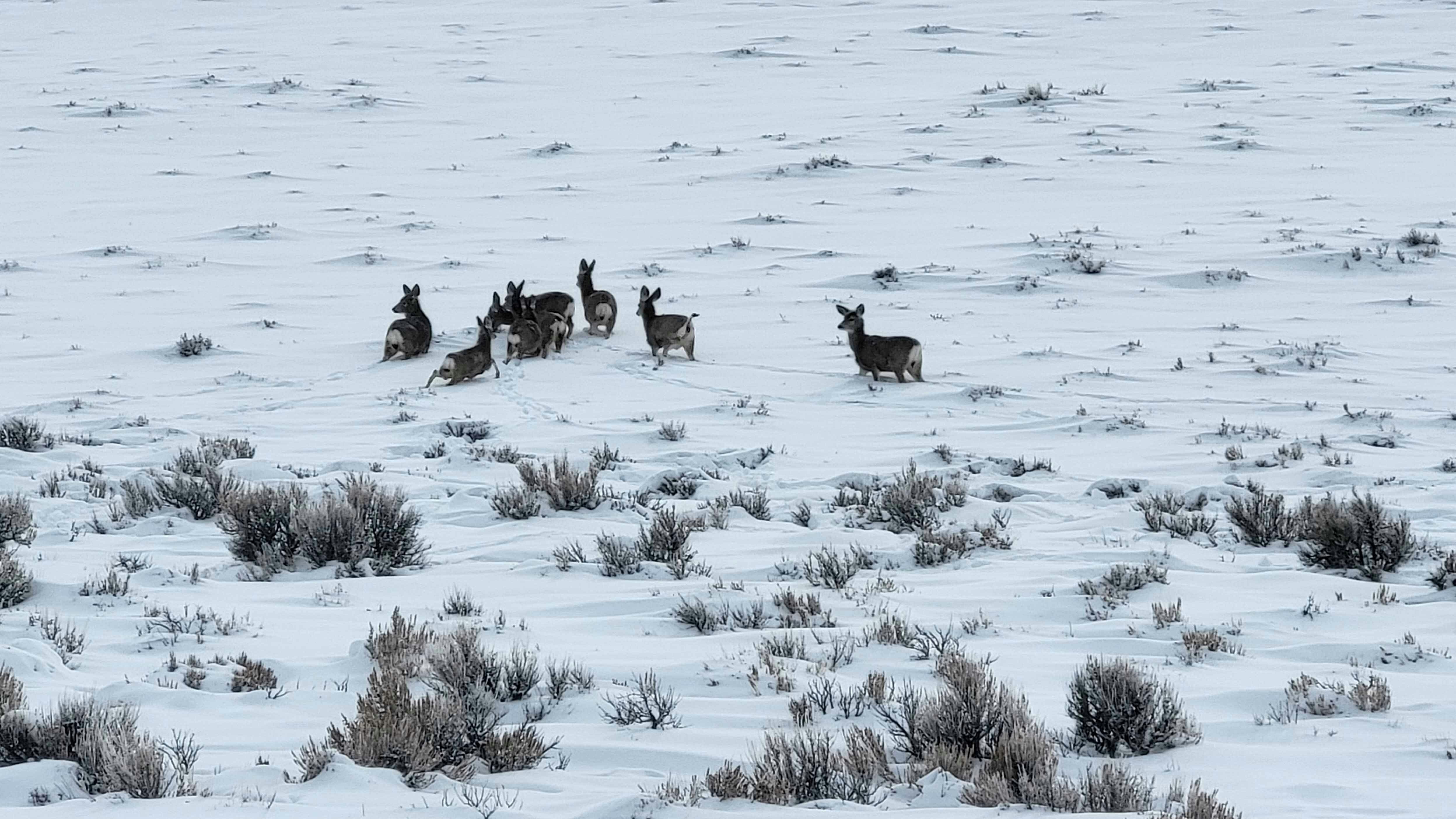
There’s been concern for months over just how hard this past winter slammed the Wyoming Range mule deer herd and adjacent populations, but it could be far worse than even the most pessimistic previous estimates.
As many as 80% of the adult deer in that region might have died and this year’s crop of fawns was essentially wiped out, Wyoming Game and Fish Director Brian Nesvik said Tuesday.
The Wyoming Range mule deer herd is one of the most prized herds in the West. Going into winter, it was thought to number about 30,000, Nesvik told the Wyoming Legislature’s Joint Travel, Recreation, Wildlife and Cultural Resources Committee.
Nothing Like He’s Ever Seen
The fate of other big game species in the hardest-hit areas, pronghorn and elk, hasn’t been fully determined, Nesvik said. Game and fish typically doesn’t do widespread herd counts in the spring.
The mule deer losses were gauged according to monitoring of deer migrating back to summer range as massive snowpacks finally melted off.
Some parts of Wyoming fared well over the winter, and overall the state’s elk numbers remain above objective for some herds, he said.
However, the winter was brutal enough is some places to kill significant numbers of elk, which he said is indeed rare.
“We did see some winter elk mortality. That’s not something I’ve seen in my career,” Nesvik said.
Hunting Tag Cuts
The worst kill zones included winter ranges in the regions around Pinedale, Kemmerer, the Green River area, parts of Sweetwater County, and to the south around Baggs, Nesvik said.
Pronghorn (commonly called antelope) in some place suffered doubly from the brutal weather as well as a rare strain of pneumonia that spread among herds, he said.
The Wyoming Game and Fish Commission earlier this year decided to cut roughly 10,000 antelope hunting tags because of the losses, and there were cuts to deer tags too.
“We had pronghorn hunt areas where we closed the season completely,” he said.
No deer seasons were shut completely down, although licenses for does were severely cut back or eliminated in some hunt areas.
“We have heard from a lot of people, ‘Shut everything down,’” Nesvik said. “But buck deer don’t have babies.”
As long as does are protected, herds should bounce back, he said.
“You can literally (have) one buck deer for every 20 does, and they’re all going to be covered,” he said.
Belt-Tightening
Hunting tag cuts, as well as a decline in nonresidents applying for elk tags, could affect Game and Fish’s revenue, Nesvik said.
Most of the agency’s budget comes from hunting and fishing license tags, as well as Wyoming’s share of federal taxes that hunters and anglers pay on things such as firearms, ammunition and fishing tackle.
Game and Fish has enough socked away to cover six months of operating expenses, so there shouldn’t be a budget crisis, Nesvik said. Large “one-time” expenses, such as new buildings or infrastructure improvements, might have to be put on hold.
He also noted that hikes in some nonresident special draw hunting tags could raise enough money to offset inflation in the costs of such things as fuel for Game and Fish vehicles.
Mark Heinz can be reached at mark@cowboystatedaily.com.