The Wyoming Supreme Court upheld a Riverton man’s felony stalking conviction Tuesday, saying the prosecutor did not violate the man’s rights by emphasizing his decision to remain silent.
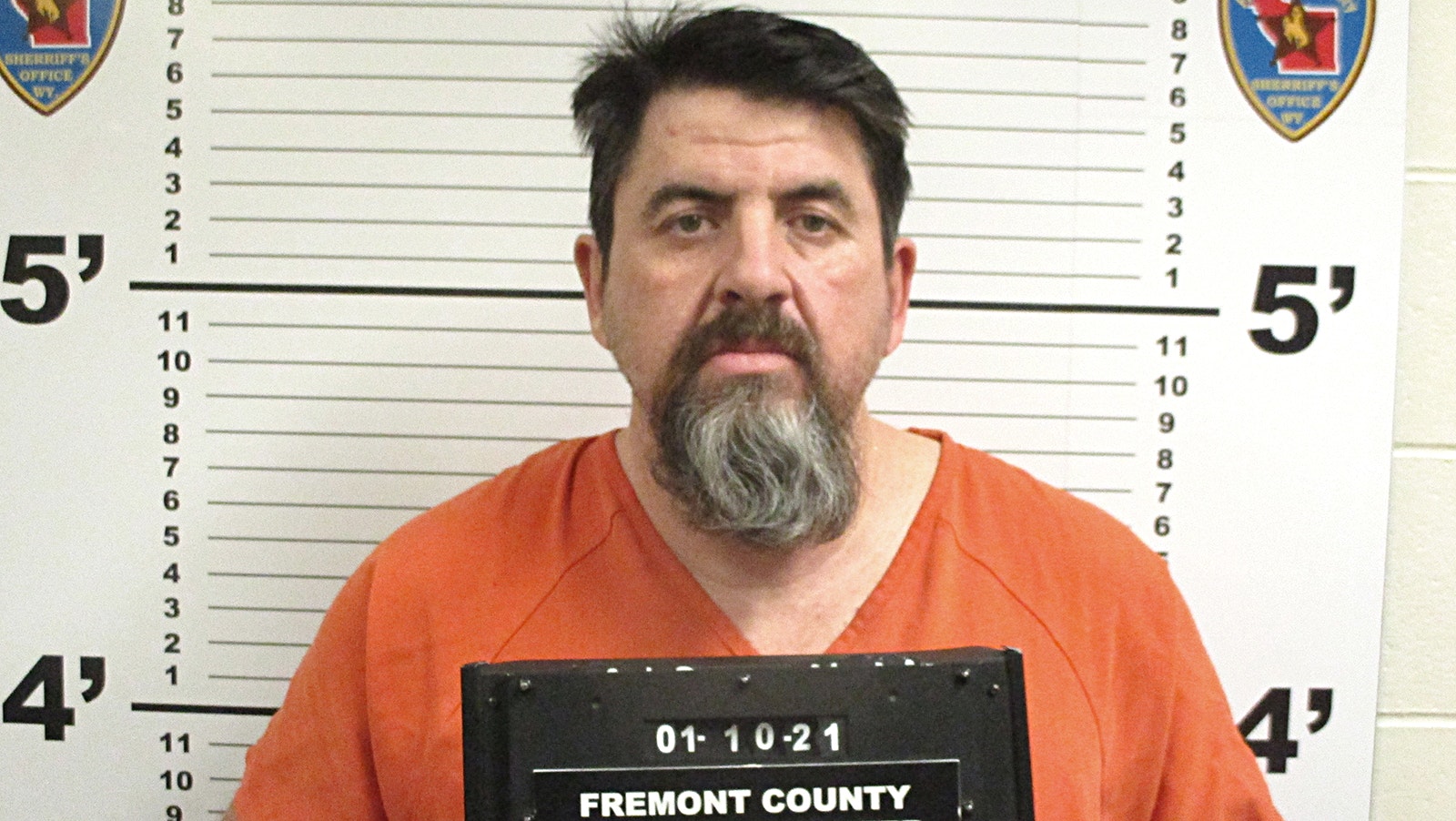
A jury last year convicted David Wayne Hembree, 53, for stalking his ex-girlfriend and sneaking into her home through a dog door.
District Court Judge Marvin Tyler later sentenced him to three to six years in prison. Hembree is at the Wyoming Honor Conservation Camp in Newcastle, according to the prison system's website.
Hembree and his former girlfriend dated from autumn 2017 through May 2019, and had a strictly “physical” relationship from August to December 2019.
On Valentine’s Day 2020, the woman made it clear she didn’t want to be with Hembree, according to court documents.
Hembree kept asking her questions, saying if she wouldn’t answer his questions he’d come to her house and ask them.
She appeased him by answering his questions because she didn’t want him at her house. By summer 2020, Hembree was still contacting her and she asked him to leave her alone.
Hembree did the opposite, court documents indicate. He drove by her house at all hours. She asked him to stop.
In September 2020 she stopped responding to his text messages, and he drove by her house “almost every single night,” the woman later told police. He started driving by her place of work, too. When he sent what court documents call “a particularly inappropriate text,” she blocked his number, so he reached out on Snapchat.
Through The Dog Door
The woman was in bed talking on her phone on Dec. 18, 2020.
She rolled over and found Hembree standing next to her bed, court documents relate. She hopped out of bed, pulled Hembree out of the room, shoved him down the hallway and out the door.
She reported the incident to the Riverton Police Department, which determined Hembree had gotten in through the dog door.
Authorities served Hembree with a protection order on Dec. 30, 2020, prohibiting him from contacting or surveilling the woman.
On Jan. 7, 2021, she saw Hembree drive by her house and called police.
Police didn’t find him at first, but when Hembree drove by two hours later and the woman reported it again, Fremont County Sheriff’s Deputy Aaron Lane caught up with Hembree, pulling him over in the woman’s neighborhood.
Hembree wouldn’t tell Lane where he’d just been.
‘Cuz I Didn’t Do That’
Lane arrested Hembree.
Hembree asked about case paperwork, which he said referenced the term “spying distance.”
“What does that even mean?” asked Hembree.
“It means that you parked your vehicle with your lights off close to her house,” answered Lane.
Wyoming’s definition of stalking includes putting a person under surveillance, but doesn’t use the language “spying distance.”
“Cuz I didn’t do that,” Hembree told Lane during the arrest.
Hembree did not testify at his trial.
Sorry, No
Hembree based his appeal on three claims of injustice: that the prosecutor wrongly emphasized his decisions to stay silent when talking with Lane and again at trial; that the state shouldn’t have based its case on the idea of “spying distance,” since that’s not a statutory term; and that his sentencing order had some of its offense dates missing.
The Wyoming Supreme Court issued a holding by Justice Kari Gray, ordering the court to fix the clerical error on the sentencing order, but declaring Hembree’s other claims of injustice invalid.
Right To Remain Silent
During closing remarks at trial the prosecutor said stalkers have a specific intent to harass someone. But with Hembree, it’s difficult to tell what he was doing in his ex’s neighborhood.
“Well, how would we really know what specifically he intended or what he was thinking unless he told us?” said the prosecutor. “How would you know what somebody really intends or is thinking?”
Though Hembree saw this speech as a swipe at his exercise of his right to remain silent, the high court saw it instead as the prosecutor directing the jury toward circumstantial evidence, since Hembree furnished so few words of his own during the arrest.
The prosecutor also emphasized a four-second pause during Hembree’s statements to Lane, and Hembree’s ambiguous answer to one of Lane’s questions.
Gray wrote that these were merely descriptions of the evidence, not attacks on Hembree for exercising his rights.
Spying Distance
Hembree also argued that the state had no right to use “spying distance” as an element of his crime.
While the law uses the word “surveillance” instead of “spying distance,” Hembree failed to show the high court how Lane’s testimony on spying distance conflicted with the law’s wording or the ordinary meaning of surveillance.
“Because Mr. Hembree presents no cogent argument as to how a clear and unequivocal rule of law has been violated, he has not established plain error,” wrote Gray in the ruling.
Gray ordered the Fremont County District Court to fix a clerical error in the dates on Hembree’s sentencing agreement, but said the whole case didn’t need to go back to district court for that reason.
Clair McFarland can be reached at clair@cowboystatedaily.com.