Like many states across the country, Wyoming is crafting measures to try to push back against progressives pressuring companies to adopt policies favorable to their political causes that are often at odds with the best financial returns for investors.
Also known as environmental, social and governance (ESG), the movement has been able to advance political causes without involving legislatures, and critics say it’s had a detrimental impact on financing of fossil fuel companies.
‘It Sucks’
The Wyoming State Loan and Investment Board is considering a draft policy to incorporate into its investment statement policy. Once the board officially adopts the policy, those who manage Wyoming’s finances would be required to adhere to it.
Secretary of State Chuck Gray said the draft language was too vague and should include language that definitively spoke to an opposition to ESG.
“If you don’t have any reference to ESG, other than the title in the body of it, I got to ask, is this just window dressing? Are we trying to actually take on ESG?” Gray said during a SLIB meeting last week.
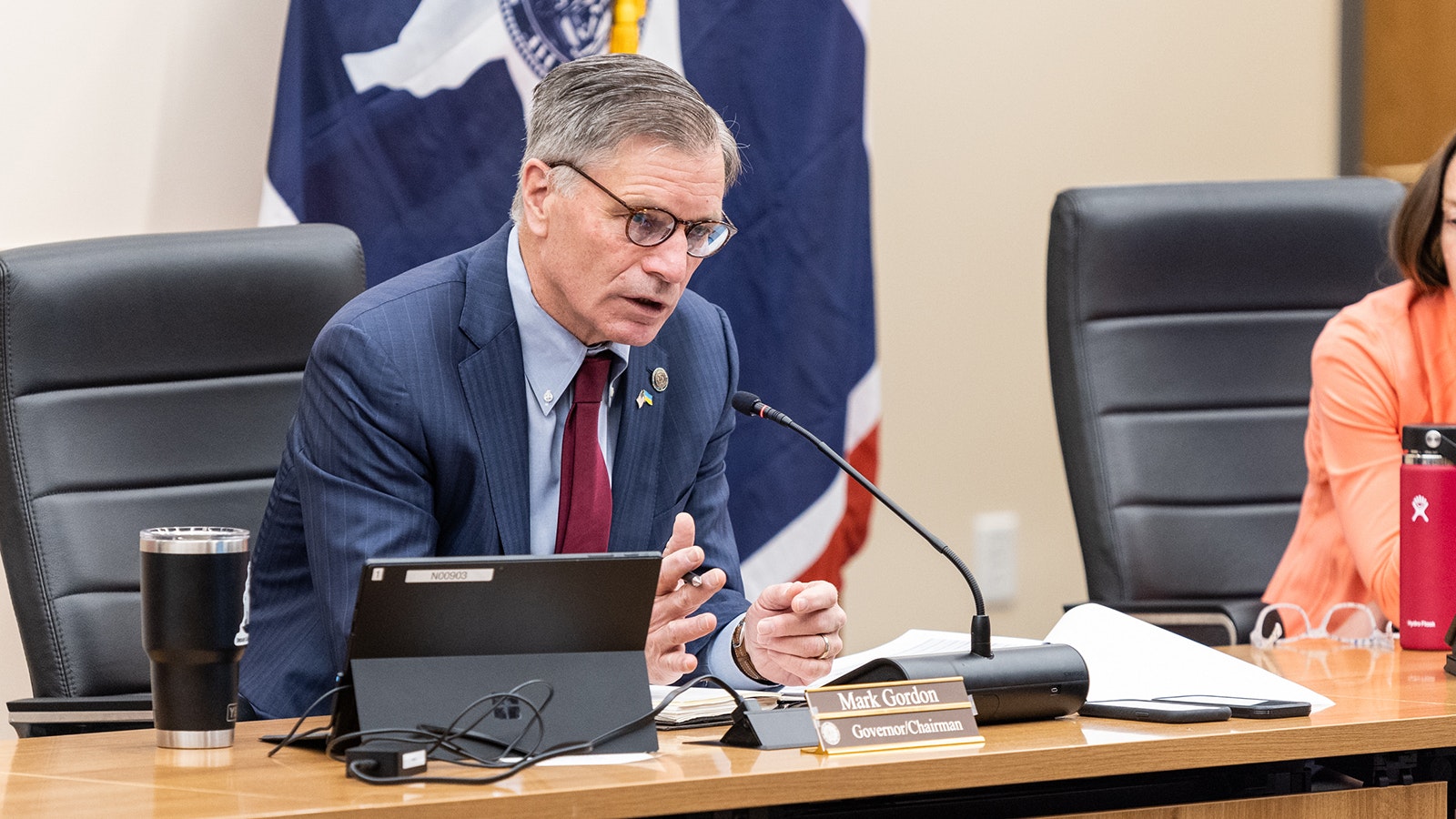
After some back and forth on the board over the best way to address that concern, Gov. Mark Gordon joked that the language should be blunt.
“Put it in plain language. It’s misguided, and it sucks. So what if we said, ‘ESG,’ in quotation marks, ‘investing sucks?’” Gordon said.
Politics Over Business
Sometimes called “woke investing,” ESG rates funds on various markers of progressive-friendly policies related to protecting the environment, diversity in the workplace and community relations.
Any association with fossil fuel industries quickly gets a fund rated down. Timber industries, gun manufacturers and agricultural businesses also face pressure from the movement.
Critics of the ESG movement say it has become a formidable mechanism in pushing progressive policies by financially starving companies that don’t comply with ESG standards. In this way, ESG has been able to circumnavigate democratic processes.
The concern for Wyoming’s financial officials is that the firms the state contracts with are letting politics get in the way of getting the best rate of return for the state’s investments.
Ready For Primetime?
The challenge for the board is how to draft a policy that lays out what’s required of the state’s investment managers and how the board can determine if they’re acting outside those requirements.
Rep. Bob Nicholas, R-Cheyenne, said the draft language was confusing and potentially contrary to state statute. The draft, he explained, states that factors that investment managers can’t consider are those that include the furtherance of social, political and ideological interests.
Nicholas said that could include a lot of decisions that wouldn’t necessarily be outside the best financial interests of the state.
As an example, Nicholas said an investment in the development of a wind or solar farm would involve a social interest, but may be a good investment for the state.
“My suggestion is that this is premature. It’s not, as you would say in the Legislature, it’s not primetime language,” Nicholas said.
Threading The Needle
Treasurer Curt Meier said that the language wouldn’t prevent an investment in a wind or solar farm, if it’s the highest risk adjusted rate of return, which is a calculation of the potential profit the risk that must be accepted to achieve it.
He said the language isn’t necessarily perfect, but it avoids problems other states are having with their ESG policies.
“I think this tries to thread the needle, and I think it does a pretty good job,” Meier said.
He said the policy would initiate more communications with the companies that handle the state finances without being combative.
Little Change
Megan Degenfelder, superintendent of public instruction, said the policy, if it were included in the state’s investment policies, would change very little about how the board conducts business.
“We aren’t giving ourselves authority or creating any process that isn’t already available to the treasurer or the board,” Degenfelder said.
Degenfelder said that when investment managers come for interviews before the board, they are scrutinized for their attitudes toward investing in fossil fuel companies and if they’ll make decisions in the best interest of the state’s financial returns.
She said she wasn’t suggesting the policy isn’t necessary. It just wouldn’t give them tools they don’t already have.
“We are already grilling managers about this. I’m fully confident we would divest of a manager if it was operating in a way that we found egregious to the state’s best interest,” Degenfelder said.
Tabled
After the discussion, the board decided it would continue working on the draft language for consideration at the board’s next meeting. The board did adopt a policy allowing the treasurer’s office to hire a proxy manager, who would help manage the state’s proxy voting decisions.
Shareholders who own a certain amount of stock in a company are allowed to submit proposals for the shareholders to vote on. The proxy manager will help guide the state’s votes on proposals.