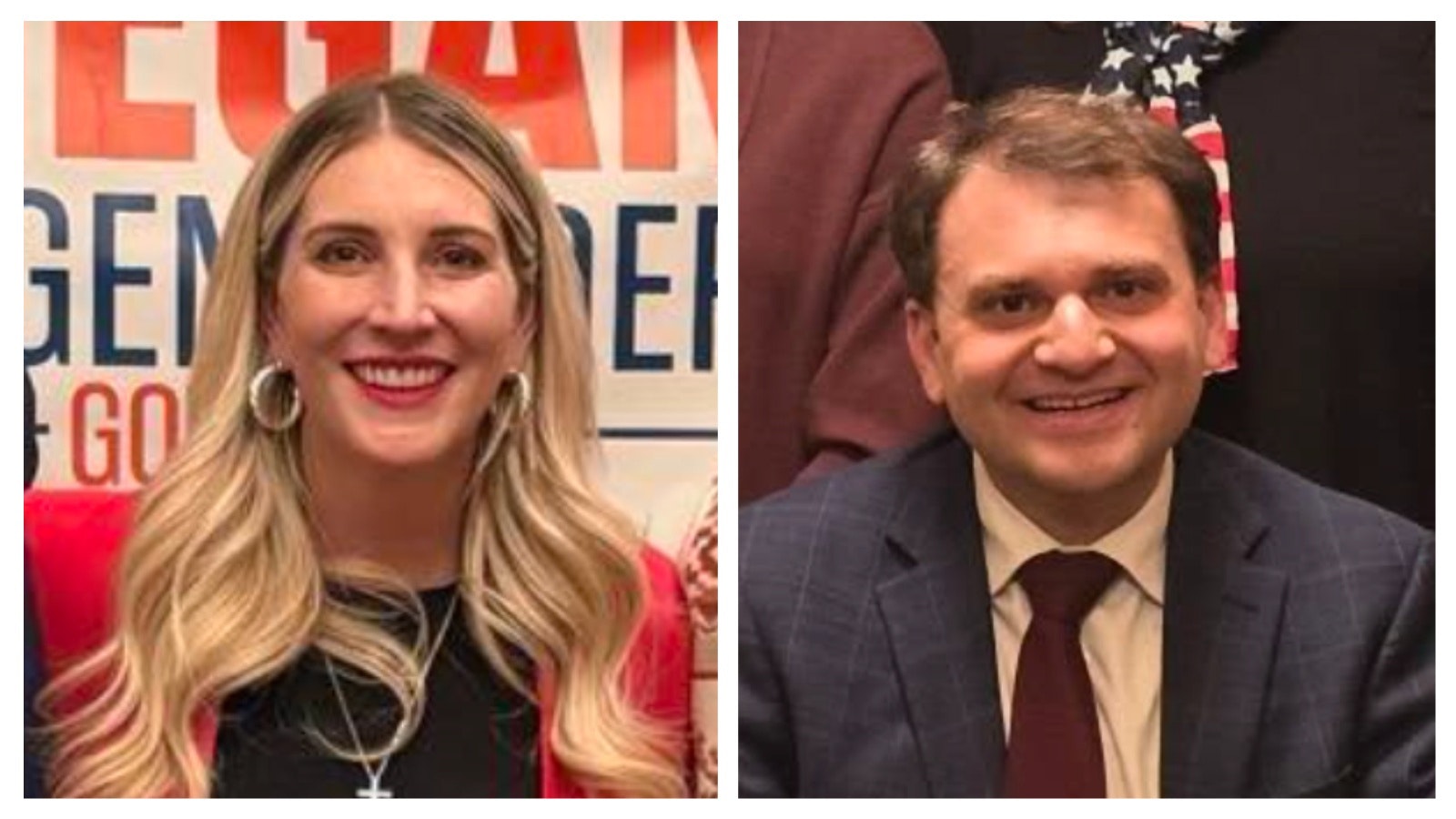
Wyoming’s top Democratic lawmaker is criticizing State Superintendent Megan Degenfelder’s goal to rid the state’s schools of critical race theory as a partisan political maneuver.
Degenfelder dispatched a plan for Wyoming’s public schools last week that prioritizes keeping schools from teaching critical race theory. Her plan calls the curriculum “divisive and inappropriate” and a symptom of political bias.
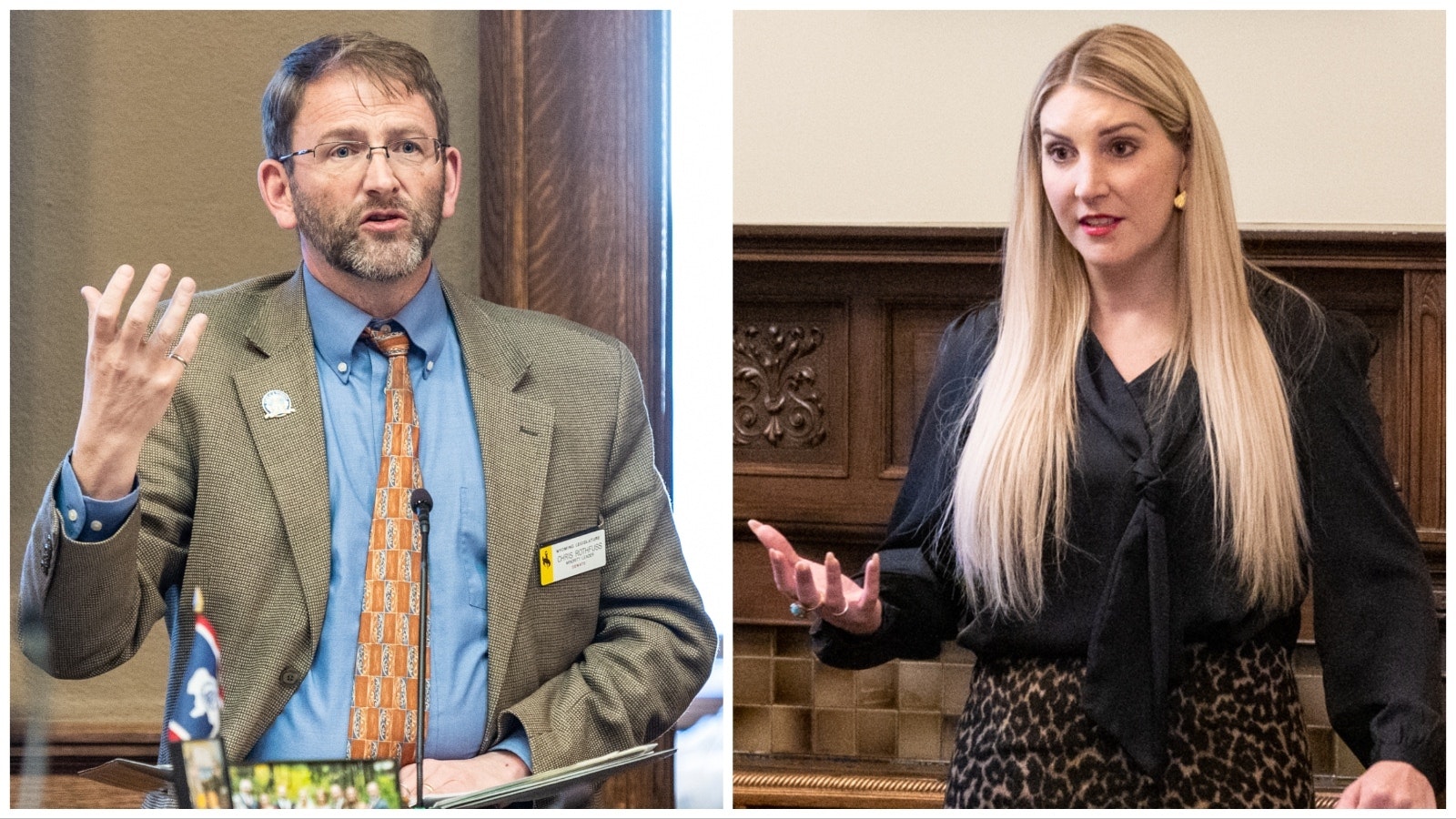
Sen. Chris Rothfuss, the state Senate’s Democratic minority floor leader of 10 years, told Degenfelder during a legislative Joint Education Committee meeting Monday that her goal is, in itself, a symptom of political bias.
“That’s an interest we certainly share, that there shouldn’t be political bias in schools; there should be an objective marketplace of ideas,” said Rothfuss.
But for Degenfelder to label critical race theory as divisive and inappropriate, he continued, is “effectively an expression of political bias.”
Republicans want to eliminate critical race theory, he said.
“That is an interest of one political party and not an interest of another political party,” said Rothfuss. “And for that matter, teaching divisive concepts, honestly, can often be a good thing in the education system.”
Rothfuss asked Degenfelder how the state can pivot to educational objectivity when her definition of that, in his view, is partisan.
Transparency
Degenfelder said the “key first step” is transparency between educators and parents.
If parents can “again meaningful engage” in the school system, the controversial issues could be defined more clearly, she said. She noted that she is working to create advisory cabinets that include students, parents, teachers and industry leaders.
The cabinets can work on defining those controversial terms as well, she said.
Starting Point
Rothfuss said forging transparency and seeking input won’t help if the starting point is biased.
“If you have a goal that is intrinsically political biased as a component of eliminating political bias, how can transparency or even additional input solve that?” he asked. “Did you run each of these goals by a diverse enough political spectrum, where everyone was agreeing that, ‘Yes, we absolutely need to do that’?”
Degenfelder disagreed that eliminating critical race theory is an inherently political goal. The objective, she said, is to eliminate a curriculum espoused by one political party and not the other.
Rothfuss invoked his position as minority floor leader, saying he represents a quarter of the state’s population — Wyoming’s Democrats.
“I can comfortably say that that (your goal) be a politically divisive statement for about a quarter of the state’s population,” he countered.
Their disagreement, he added, demonstrates the conflict of which he is warning.
A Request
Rothfuss asked Degenfelder to seek a “broad political spectrum” in her cabinet to reflect the state’s minority as well as its majority.
Degenfelder said she’s open to meet with any school stakeholders in the state. But she added that one of the most pressing concerns she heard while campaigning for office last summer as she traveled the state was parents’ alarm regarding critical race theory.
What’s This, Then?
Critical Race Theory is a curriculum asserting that race pervades society and is fostered and perpetuated by the legal system, according to Merriam-Webster.com.
It “demonstrates the legal codification of racism in America” and reveals how racial oppression “shape(s) the legal fabric of the (United States),” according to David Miguel Gray, a racial philosophy processor at the University of Memphis.
Conservative commentator Ben Shapiro compared the curriculum to Marxism and said it seeks to undermine the rights promised by the U.S. Constitution by dismissing them as fabrications by racists.
Opposition to and support for critical race theory in public discourse generally fall along political partisan lines.
Reach Clair McFarland at: Clair@CowboyStateDaily.com