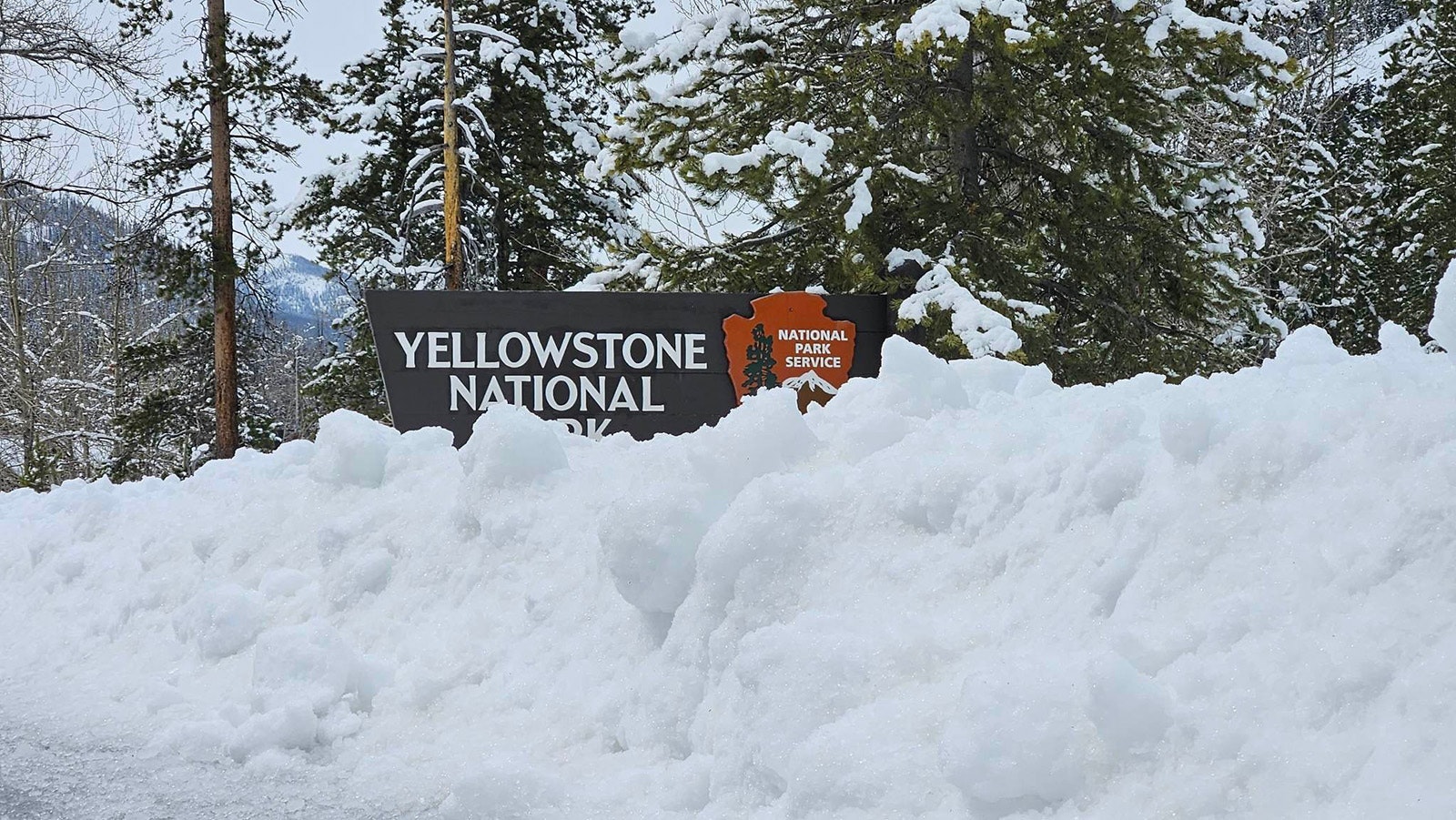
Far from ending the “mega-drought” that’s gripped the Colorado River Basin for years, a massive Wyoming snowpack will do little more than buy Wyoming and other downriver states some time.
“This will stave off the crisis we’re headed toward maybe for a few months,” Thomas Minckley, a professor of Geology and Geophysics at the University of Wyoming, told Cowboy State Daily.
“Notice that I said ‘months’ and not ‘years,’” he added.
18,000 Cubic Feet Per Second
Minckley in 2019 was part of a UW-led venture that retraced the route of the 1869 John Wesley Powell expedition down the Green and Colorado rivers. That was another exceptionally wet year, but also wasn’t enough to break a 22-year-long drought, he previously told Cowboy State Daily.
He'll soon depart for a run down the river through the Grand Canyon. Engineers plan to move water from Lake Powell through the canyon and into Lake Mead at 18,000 cubic feet per second.
“They’re moving a lot of water toward the critical need in Lake Mead,” he said. “I want to see what riding 18,000 cubic feet per second will be like.”
Even so, this year, like 2019, will make little difference in the big picture, he said. There’s still more demand for water than the Colorado River can supply.
“This is a really fortunate year and it doesn’t hurt. But if you look at what’s going on in the Lower Basin, they’re working really hard to move water into that critical infrastructure, particularly Lake Mead, right now,” Minckley said. “We will start using that water up as soon as everybody turns their air conditioning on in about a month.”
Legally And Politically, More Of The Same
Wyoming is tied to the fate of the Colorado River basin by the course of the water that flows through it and the course of the complex laws and regulations that determine who get how much from the river.
Along with Colorado, Wyoming is the one of the primary headwaters states for the Colorado River, through the Green River and Flaming Gorge reservoir.
Wyoming is also bound by the terms of the Colorado River Compact.
The compact is an agreement forged in 1922 that divides water rights and downstream flow obligations along the Colorado River and its headwaters between Wyoming, Colorado, Utah, New Mexico, Arizona, Nevada, California and Mexico.
UW law professor Jason Robison is an expert on the 1922 Colorado River Compact. He edited a 2022 book on the subject published in time for the compact’s 100th anniversary.
Just as this year’s heavy snowpack and robust runoff probably won’t affect the physical flow of the river, it won’t do anything to change the course of legal and administrative wrangling over water rights, Robison said.
“Good water years” amid the longstanding drought aren’t enough to change policy, he said.
Two Big Ones To Watch
There are now two things in play that could most impact policy related to the Colorado River, Robison said.
The federal Bureau of Reclamation is responsible for the infrastructure, such as dams and reservoirs, along the Colorado River. That agency is drafting a supplemental environmental impact statement for Lake Mead and Lake Powell that will determine policy through 2026, he said.
Meanwhile, a case involving water rights claims for the Navajo Nation in Arizona is still pending before the U.S. Supreme Court.
The Navajo Nation is trying to supply water to its 400,000 members in Arizona. Since 2003, the nation has been petitioning federal courts for water rights claiming that Arizona and the federal government, through the Bureau of Reclamation, are obligated to provide the nation with clean drinking water from the Colorado River.
The case ended up before the Supreme Court this year, and a decision might come down soon, Robison said.
“I think that’s going to drop in the latter half of June,” he said, adding that the Bureau of Reclamation’s supplemental EIS could be finalized by the end of the summer.
The outcome of either, let alone both together, could determine how things go all along the river, and how Wyoming will be affected as a headwaters state, he said.
Abandon All Hope?
So, despite Mother Nature’s bounty this winter, the Colorado River crisis isn’t going away anytime soon, Minckley said. Though that’s no reason for despair, it is a sobering reality.
And even before the streams and rivers that feed into the Colorado River Basin get their share of moisture from the snow, a lot of it will go toward the ground and sky, he said.
“I’m of the school of thought that the atmosphere is thirsty and the soil is thirsty, and those two will take their share before the streams get any,” he said.
Mark Heinz can be reached at Mark@CowboyStateDaily.com