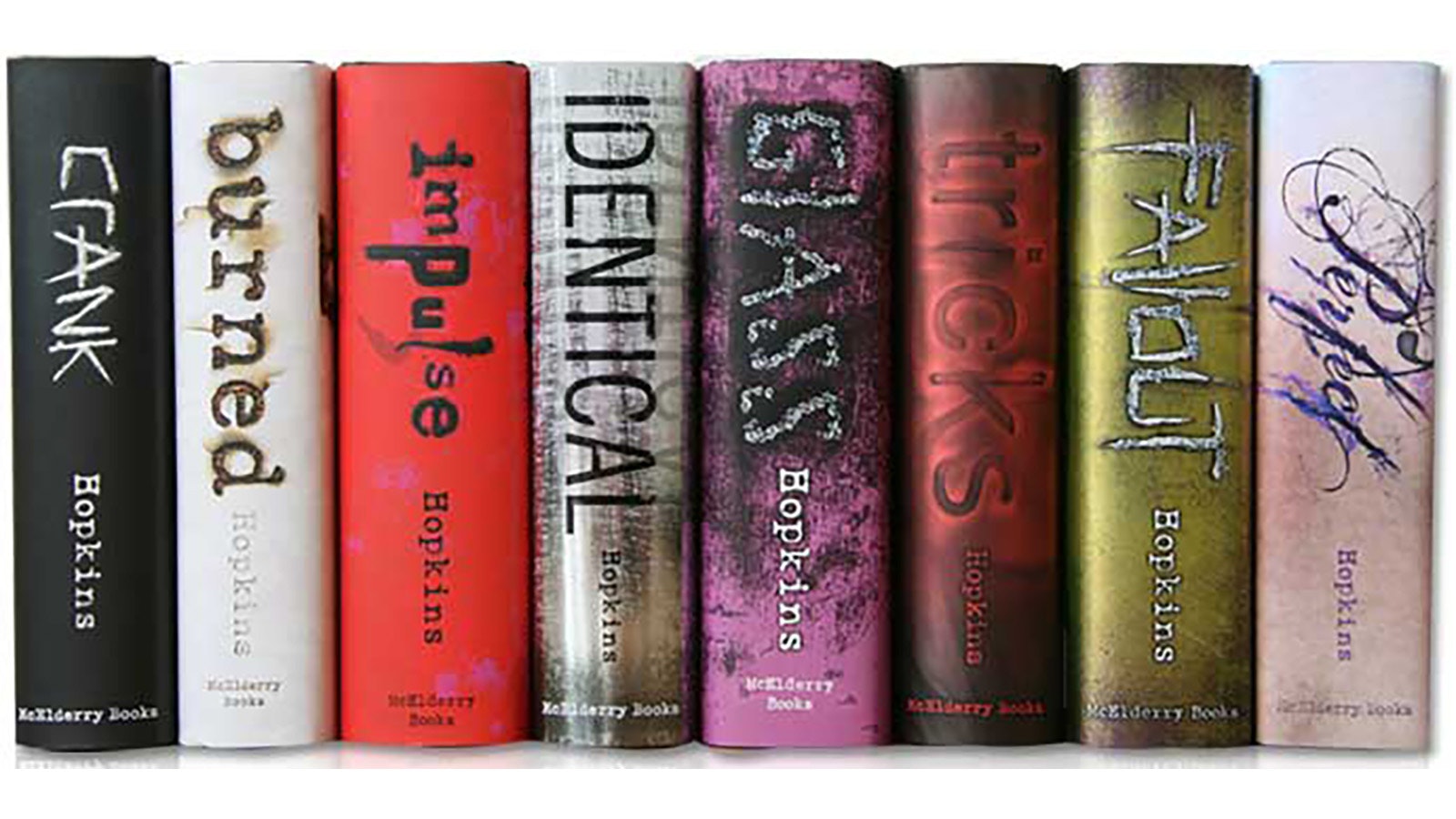
Four books about methamphetamine, sex acts, addiction and recovery will stay in high school libraries in Casper after a school district subcommittee voted to keep the books and the school board resisted a motion to act against that recommendation.
The Natrona County School District No. 1 board met Monday and voted down an appeal of a reconsideration of the board’s March decision to keep Ellen Hopkins’ novels “Crank” and “Fallout” in local high school libraries.
“Crank” is about teenager Kristina Snow’s descent into methamphetamine addiction and promiscuity after her estranged father and a boyfriend introduce her to drugs during a summer visit.
“Fallout” is a sequel exploring similar themes in Snow’s children.
Board members Mary Schmidt and Jenifer Hopkins voted to appeal the reconsideration committee’s March decision to keep the two books, but the remaining majority of the board voted to back the committee's decision instead.
The reconsideration committee in May also dispatched a memo in favor of keeping two other Ellen Hopkins books titled “Glass,” and “Traffick.”
“Glass” is the second book in the “Crank” trilogy, and “Traffick” is part of a separate series exploring sex trafficking and its victims, as well as drug addiction.
Banning Or Choosing?
Board members Jenifer Hopkins and Mary Schmidt urged their fellow trustees to overrule the committee’s recommendation and remove “Crank” and “Fallout.”
They said that libraries are unavoidably discriminating against certain books every day since they can’t house every book on the planet.
Both women pointed to controversial and mature themes in the books, such as rape, extreme drug addiction, spousal infidelity and a conversation between teacher and students about masturbation.
“I’m disappointed the review committee would believe (these are useful) to an academic setting,” said Hopkins.
Schmidt gave a more technical argument, saying the books don’t meet the reconsideration committee’s individual criteria for literary and artistic value.
The books are written in a free verse form that sometimes deploys strong metaphors and imagery, but also at times features erratic, bifurcated verse columns, as the character succumbs to addictive tendencies.
Schmidt argued that the books romanticize dangerous behaviors and self-harm. She cited a scene describing sexual activity enhanced by ecstasy and cocaine, and another scene in which a character cuts herself with a razor blade, “and how it didn’t hurt.”
Schmidt said every controversial book in the school library should be under a parental opt-in requirement, rather than subject to an opt-out at a parent’s request.
‘This Is Stupid’
Other trustees, however, said the books are useful for understanding people falling prey to addiction, especially in Casper, which is no stranger to drug issues.
Board member Kevin Christopherson said he couldn’t get through the books because of their erratic free-verse forays, but didn’t find anything bad in the first chapter of “Crank.”
Christopherson said the evils confronting children are likelier to come through their smartphones.
“We’re wasting our time. This book reconsideration committee, I would like to know how much money we’ve spent in salaries,” he said. “People … could be teaching kids, but they have to come in here and look at another book.”
Christopherson referenced challenges the board handled last year of books “Gender Queer” and “Trans Bodies, Trans Selves.” He said the sexually graphic images in those books are offensive, but indicated that “Crank” and “Fallout” were different.
“I hope we never have to have this discussion again. This is stupid and we need to get past it,” said Christopherson.
Wake The Dead
Board member Michael Stedillie also voted to keep the books, upholding the reconsideration committee’s recommendation.
He said they are valuable as cautionary tales, and he couldn’t put them down. They also speak to the healing power of family, he said. One of the books “rings its warning bells so loudly it would wake the dead,” said Stedillie.
Stedillie said he encourages high school students to read them, and believes some high schoolers in the district have already encountered “the monster’ — which is what the author calls methamphetamine — and should be aware of the havoc it can wreak on their lives and families.
But Not At Elementary, Middle Schools
Although the reconsideration committee upheld two of the books in its March ruling and two more in its May ruling as appropriate for high school libraries, the committee in May objected to the fact that “Glass” was in the Midwest School, which serves elementary though high school-age students, and the Dean Morgan Middle School.
“Traffick” — which was only in the high schools — should be kept out of the lower grades going forward, the committee said, and "Glass" should be taken out of the lower-grade libraries.