The Bureau of Land Management opened a public comment period this week on an environmental review of federal leasing of thermal coal. It’s an early step in a long process that’s needed if a federal moratorium on leasing is to be lifted, which will be required for long-term coal production in Wyoming.
Travis Deti, executive director of the Wyoming Mining Association, told Cowboy State Daily these leases are vital to the industry. They’re especially important considering it’s been a decade since a new federal coal lease has been approved in Wyoming.
“It’s a big deal,” Deti said, adding that the current situation is “a troubling spot to be in. We’ve got to get the moratorium lifted.”
On-Again, Off-Again Moratorium
The moratorium was put in place by the Barrack Obama administration to conduct a full review of the federal leasing program’s impact on climate change.
The moratorium applied only to thermal coal, which is used in electrical generation. Metallurgical coal is used in heavy industry, such as steel production, and it wasn’t impacted by the moratorium. Nearly all coal produced in Wyoming is thermal.
During the Trump administration, then-Secretary of the Interior Ryan Zinke rescinded the moratorium.
Several anti-fossil fuel groups, including the Sierra Club, Citizens for Clean Energy and the Center for Biological Diversity, immediately filed a lawsuit in federal district court challenging Zinke’s order on the argument that a full environmental assessment under the National Environmental Policy Act (NEPA) is required before the moratorium could be lifted. The states of California, New York, New Mexico and Washington also sued.
Before the case was decided, the Biden administration reversed Zinke’s order, though Secretary of the Interior Deb Haaland did not reinstate the moratorium.
In August, District Court of Montana sided with the plaintiffs and reinstated the moratorium until a full environmental assessment is complete.
Unresponsive Agency
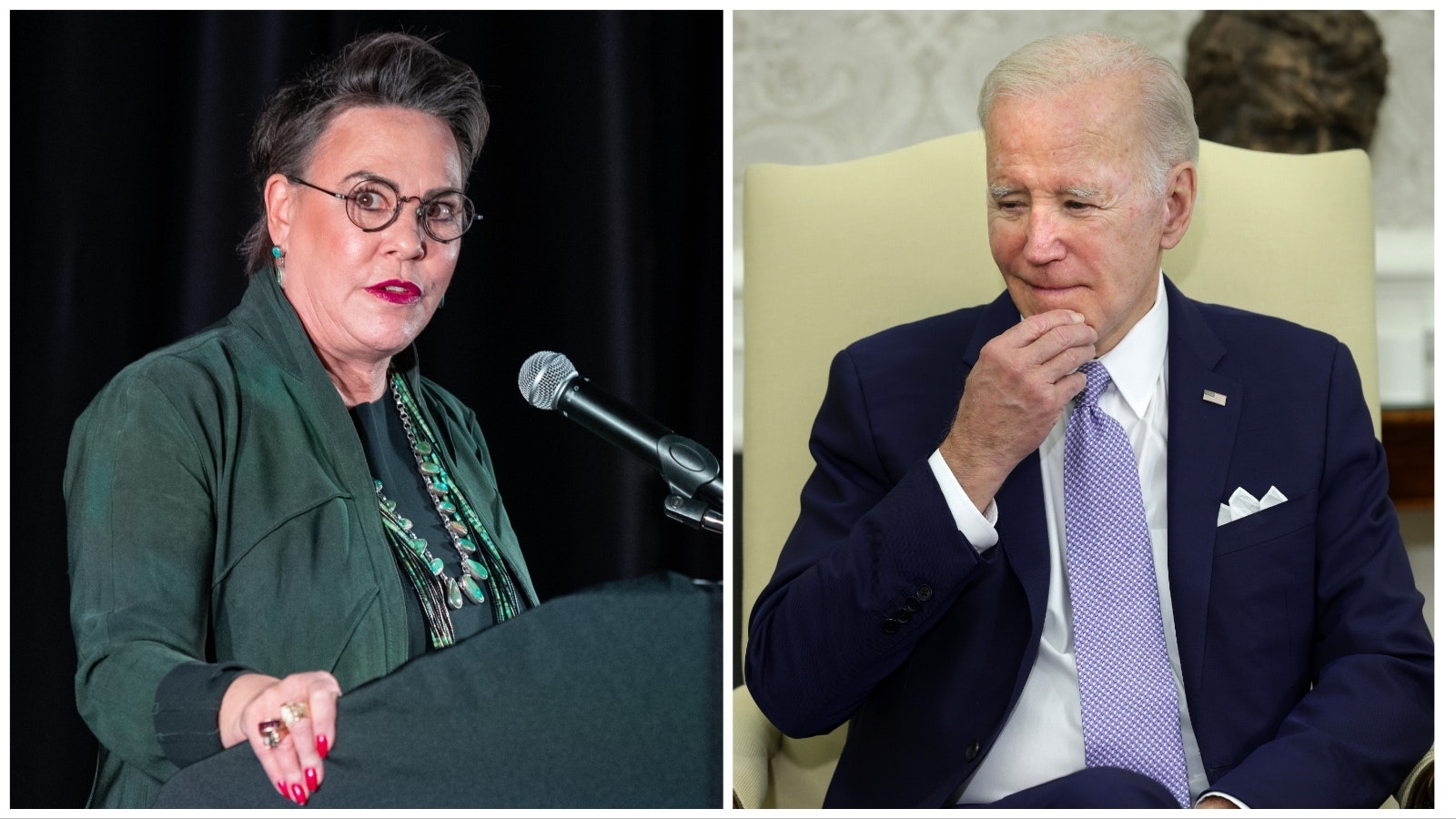
During a Republican House Committee on Natural Resources hearing last month, U.S. Rep. Harriet Hageman grilled Haaland on the impacts of the Department of the Interior on furthering “energy poverty,” a term that refers to the outcomes on the American economy of rising energy costs including individuals’ energy bills.
Haaland responded that she’d never heard the term.
During the exchange, Hageman asked how many applications for new coal leases or lease modifications had been filed with the Interior Department. Haaland said she didn’t know but would provide that information after the hearing.
Hageman told Cowboy State Daily on Wednesday that the BLM still had not provided her that information.
“Not surprisingly, the Secretary has been unresponsive. We will continue to pursue the information,” Hageman said.
Asia Accelerates Coal, US Powers Down
While Asian countries, such as China, are building coal-fired power plants at a rapid pace, which will undo any planned or accomplished emission reductions in the U.S., American utilities, including Wyoming’s largest utility, Rocky Mountain Power, are planning to shut down coal-fired plants.
The coal Wyoming is producing is still in demand, and during their most recent earnings calls, both Arch Resources and Peabody Energy reported they were sold out for 2023 and were looking into 2024.
Deti said that there is a long process between when a lease application is submitted and when it gets approved to allow coal production to go forward.
Deti said it’s been 10 years since a federal coal lease has been approved for Wyoming, and while companies have the leasing they need today, new leases are vital if the industry will be able to produce in a decade.
“It’s a very long, arduous process. It can take five to 10 years to get a lease approved. And if companies are going to have a future, they need to get more leases approved,” Deti said.
Delay Mechanisms
The NEPA process could take years to complete.
Hageman said the Interior Department isn’t acting with any urgency, and the NEPA process will be biased against coal because the Biden administration’s goal is to shut down the American coal industry.
“Executive orders, rules, guidance, control of leases and court shopping for activist judges are the mechanism. There isn’t a chance in the world that this process will be fair,” Hageman said.
Deti said the intention of the environmental assessment is driven by an interest in keeping coal in the ground.
He also said the delay in lifting the moratorium also is contributing to utilities’ long-term plans to shut down coal plants.
“As utilities make their plans long range, they're looking at the resource saying, ‘Well, these companies aren't leasing any more coal. Is coal even going to be an option for our generation?’” Deti said.
Zinke told Cowboy State Daily he’s also skeptical that the environmental assessment won’t be guided by anti-fossil fuel interests.
“Absolutely it won’t be fair,” he said. “It’s a completely baked foregone conclusion that will be driven by the extreme climate alarmists that make all the decisions in the Biden administration.”
De-Facto Ban
Hageman said the moratorium is going to have a significant impact on Wyoming’s future economy, as well as the long-term energy outlook for the nation. Coal provides 25% of America’s electricity, and 41% of that is produced in Wyoming.
“Coal is one of the largest economic drivers of Wyoming’s economy and unconstitutionally imposing a de-facto ban on its production and use would be devastating,” she said. “Sadly, Biden’s anti-coal, pro-poverty policies go far beyond these leases – and far beyond coal.”
While President Joe Biden has stated the United States will exit the use of coal in less than 10 years, European nations pursuing more ambitious emission reduction goals have faced serious energy problems attempting to do the same, including increased energy costs and shortages. Ultimately, they’ve been unable to eliminate coal use.
Reuters reported in December that Germany, considered a leader in renewable energy, increased its coal consumption by 19% in 2022 over that of the previous year. German consumers pay between two and three times more for their electricity than Americans.
“Coal is not going away any time soon,” Zinke said. “Every time there is a cold snap in Europe, they burn coal. China is building more coal power plants. If the Biden administration cared about the environment, they would continue the federal coal program.”
German coal is lignite, which is among the most polluting types of coal used for electrical generation. Zinke said that ending American coal production runs counter to any stated commitments to reducing carbon dioxide emissions and air pollution.
“We have the strictest standards and cleanest technology in the world, and the Powder River Basin coal (from Wyoming) is low-sulfur clean coal,” Zinke said.
You can reach Kevin Killough at Kevin@CowboyStateDaily.com.