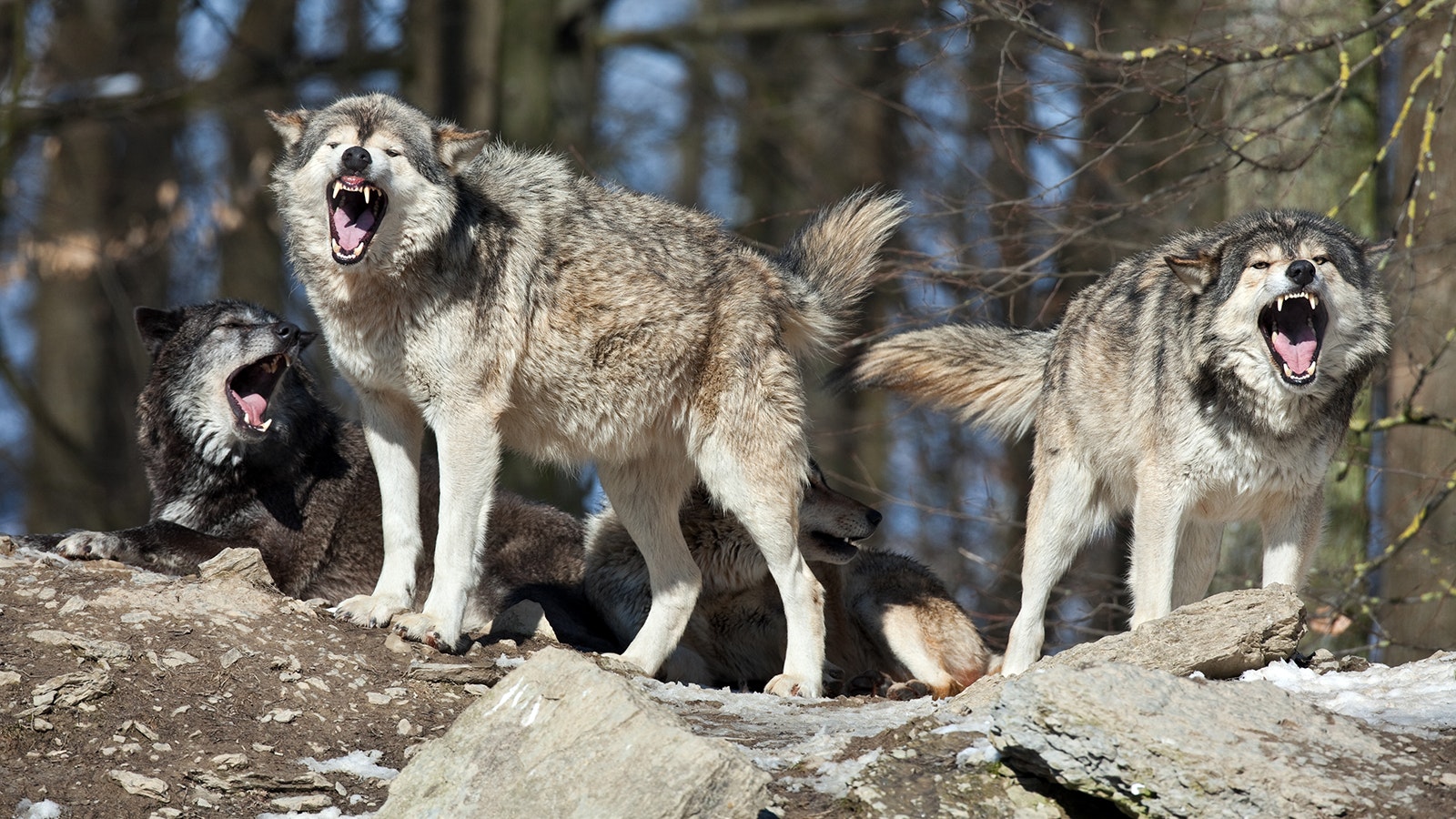
With the deadline looming to begin its wolf reintroduction program, Colorado isn’t sure where to get wolves, but it’s clear it won’t be from Wyoming, Gov. Mark Gordon said.
“Wyoming is opposed to sending Wyoming wolves to Colorado because we carefully and scientifically manage our wolf population,” Gordon said Wednesday in a statement sent to Cowboy State Daily.
“We have target population numbers, and reducing those numbers to support a translocation in Colorado may jeopardize those successful management plans,” Gordon said. “In addition, it is likely that Wyoming wolves may very well desire to return to their home ranges, once again putting them in danger as they would likely traverse unsuitable areas of potential conflict.”
Barking Up The Wrong Tree
Under its reintroduction program, the Colorado Parks and Wildlife has until Dec. 31 to start putting new wolves on the ground there. It’s remains unclear where those wolves will come from.
Colorado is reaching out to several other states, according to a statement from CPW passed along to Cowboy State Daily on Wednesday by agency spokesman Joey Livingston.
"While there have been no ‘formal’ conversations, there have been informal discussions with northern Rockies states, and CPW expects these conversations to begin in earnest if the Final Wolf Restoration and Management Plan is approved today,” according to the agency.
Only So Many States Have Them
Colorado would prefer to get wolves from the northern Rockies – Wyoming, Montana or Idaho. However, Oregon and Washington might also have viable wolf populations to draw from.
Channel 9News in Denver reported that Montana and Idaho also would likely refuse Colorado’s request for wolves, narrowing the options. And even getting wolves from Oregon or Washington could be doubtful.
Narrowly Approved Plan
Colorado’s wolf reintroduction program was initiated by Proposition 114, which barely squeaked by Colorado voters in 2020 by a margin of 50.91% to 49.09%.
Colorado already has one established wolf pack, in North Park in the northwestern part of the state along the Wyoming border.
That pack was formed by wolves that migrated from Wyoming, and those wolves already are stirring up controversy having killed numerous livestock animals and dogs, which drew fiery condemnation from U.S. Rep. Lauren Boebert, R-Colorado.
The reintroduction plan calls for 30-50 more wolves to be moved to Colorado over the next three to five years.
“CPW will aim to capture 10-15 wild wolves annually from several different packs over the course of three to five years by trapping, darting or net gunning in the fall and winter,” according to Colorado Parks and Wildlife. “Once captured, wolves will be treated and vaccinated as appropriate and determined by veterinarians, and will then be transported to Colorado where they will be taken to the release areas and the transport crates will be opened."
‘Wyomingites Know All Too Well’
The situation in Colorado sounds familiar to Wyomingites, and it probably won’t end well, Gordon said.
“Wyomingites know all too well the challenges associated with introducing a new large carnivore into an existing ecosystem,” he said. “It does not matter that the wolves may have been a part of the system in generations past; it is still a huge change.
“Wyoming has the scars and lessons learned from the reintroduction of wolves. Originally, gray wolves were to be a Yellowstone National Park population, but not to the surprise of any; wolves have been found throughout the state now.”
Wyoming is opposed to Colorado’s plan “for a variety of reasons,” Gordon said. “Our current wolf management plan is working, and it works because it is designed to manage wolves in biologically and socially suitable habitats and to keep wolves out of areas of the state where conflicts would be highest.
“Our border with Colorado is an unsuitable area for wolves, and that would mean more human conflicts. Resolution of conflicts is almost always deadly to wolves.”
Mark Heinz can be reached at mark@cowboystatedaily.com.