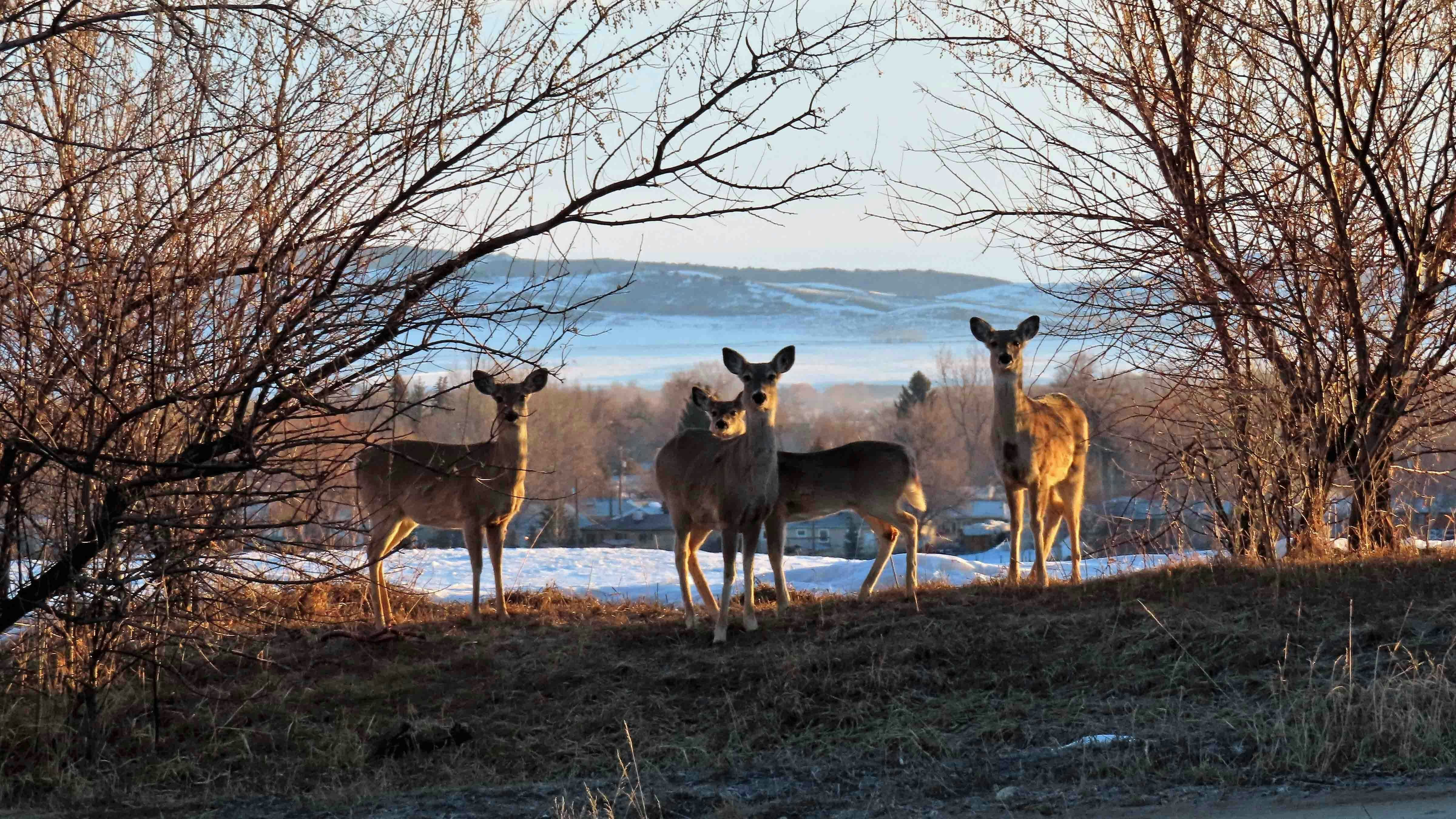
There’s no question that Wyoming stakes its reputation as a deer hunting destination on mule deer.
The Cowboy State is home to some of the world’s premier muley herds. Sure, there are pockets of mule deer elsewhere that have a reputation for producing record-shattering trophy bucks – such as Utah’s Book Cliffs Region.
But for sheer numbers and overall superior deer genetics, there’s just no beating Wyoming’s legendary mule deer hot spots in the central and south-central regions of the state.
Sadly, those areas have gotten the worst of this winter’s sledgehammer blows, and vast numbers of Wyoming’s mule deer have been lost to winterkill. In some areas, as many as half of the mule deer might have frozen or starved to death.
Whitetails ‘Will Shape You Into A Very Patient Person’
Which bring us to those “other deer” in Wyoming.
Whitetails.
With mule deer and antelope herds reeling from winterkill, the Wyoming Game and Fish Commission decided this week to cut thousands of hunting tags for those species.
Yet in some areas, tags for whitetails will be increased.
Whitetail hunting might bring to mind images of Easterners or Southerners holed up in blinds over corn piles -- nothing like what most Wyomingites would consider really “hunting.”
Yet others consider whitetails to be wily, evasive, challenging to hunt – and no less native to Wyoming than mule deer, elk or antelope.
"If you have the interest and desire, the whitetail deer will shape you into a very patient person,” avid hunter and wildlife watcher Karl Brauneis of Lander told Cowboy State Daily.
‘The Whitetail Capital Of Wyoming’
Sen. Ogden Driskill, R-Devils Tower, has mixed feelings about whitetails. His family’s ranch is right next to Devils Tower in the Black Hills Region.
“This area is the whitetail capital of Wyoming,” Driskill told Cowboy State Daily.
His family has ranched there for 140 years, Driskill said, and during that time big game herds have waxed and waned. Lately, Black Hills mule deer have declined, while whitetail populations have surged.
That side of the state escaped the worst of this winter, he said. But the mule deer have been dying off for many years, possibly because of disease.

And whitetail have filled the gaps left by mule deer, Driskill said.
“Whitetails typically have twin fawns,” he said. “They tend to out-compete mule deer on the range. I think that’s critical. There are whitetail throughout the West, but mule deer are kind of considered the pinnacle of hunting here.”
Hunting, as well as outfitting and guiding for nonresident hunters, is an “economic driver” in the Black Hills region of Wyoming, he said. So, Driskill worries that declining mule deer and exploding whitetail populations could hurt local economies.
Whitetail are also more adaptable to human land development and can cause more trouble than mule deer, Driskill added.
“Mule deer rarely cause crop damage, but whitetail frequently cause crop damage,” he said.
While mule deer typically stick to higher ground and migrate around, once whitetail settle into a river bottom or patch of farmland, they stick around, Driskill said.
“Their entire life cycle can be within a half-mile of where they were born,” he said.
‘Different Species’
Driskill advocates for whitetails and mule deer to be managed as separate species by the Wyoming Game and Fish Department. The department currently lumps all deer together for management purposes. There are exclusive whitetail hunting tags in some specific areas, but many general deer tags cover both species.
A proposed bill to split the management of mule deer and whitetail failed to gain traction with the Wyoming Legislature this year. But Driskill hasn’t given up on the idea, and brought it up again during the Game and Fish Commission meeting this week in Casper.
“Whitetail and mule deer are completely different species in how they live and operate, and I think it’s tragic that they’re managed on the same hunting license,” he told Cowboy State Daily.
That’s because hunters with a general deer tag are just as apt to kill a mule deer as a whitetail, he said.
“Really, if you’re serious about deer management, and you want to grow your mule deer herd while controlling the number of whitetail, you’ve got to separate them out,” Driskill said.
Native Species?
Some might consider whitetail to be an “invasive species.” And in certain areas, they have moved in from elsewhere to replace mule deer.
Driskill said he’s not sure what percentage of the Black Hill whitetails are native to that area.
Most of Wyoming is included in whitetails’ historic natural range – which extends across most of the United States, except for the desert southwest, according to information posted online by NatureWorks.

Different Critters
Whitetail are generally smaller than mule deer. Big mule deer bucks can weigh 300 pounds or more. The only place whitetail bucks are likely to get that big is in Canada, which is known to produce some real bruisers. A typical whitetail buck is about 150-200 pounds.
In the southwest, a smaller whitetail subspecies, Coues deer, rarely hit even 100 pounds, according to the Arizona State Parks and Trails Department.
Whitetail antler structure is also different. Whitetail buck antlers have a continuous main beam, with individual points coming off of it. Mule dear antlers “fork,” or split at several points.
Driskill said many hunters who ask permission for access to his family’s ranch enjoy hunting whitetails. So while he doesn’t want them to drive mule deer out, he doesn’t want them eliminated either.
And Wyoming’s whitetails are here to stay, he added.
“Whitetails in Wyoming used to be almost exclusive to the Black Hills, now they’re scattered all across Wyoming. Anywhere you’ve got irrigated farmland, you’ve got whitetails,” he said.
Mark Heinz can be reached at: Mark@CowboyStateDaily.com