It’s hard to imagine The New York Times giving a favorable review of a movie titled, “How To Blow Up A Wind Turbine” or “How To Sabotage A Solar Farm.”
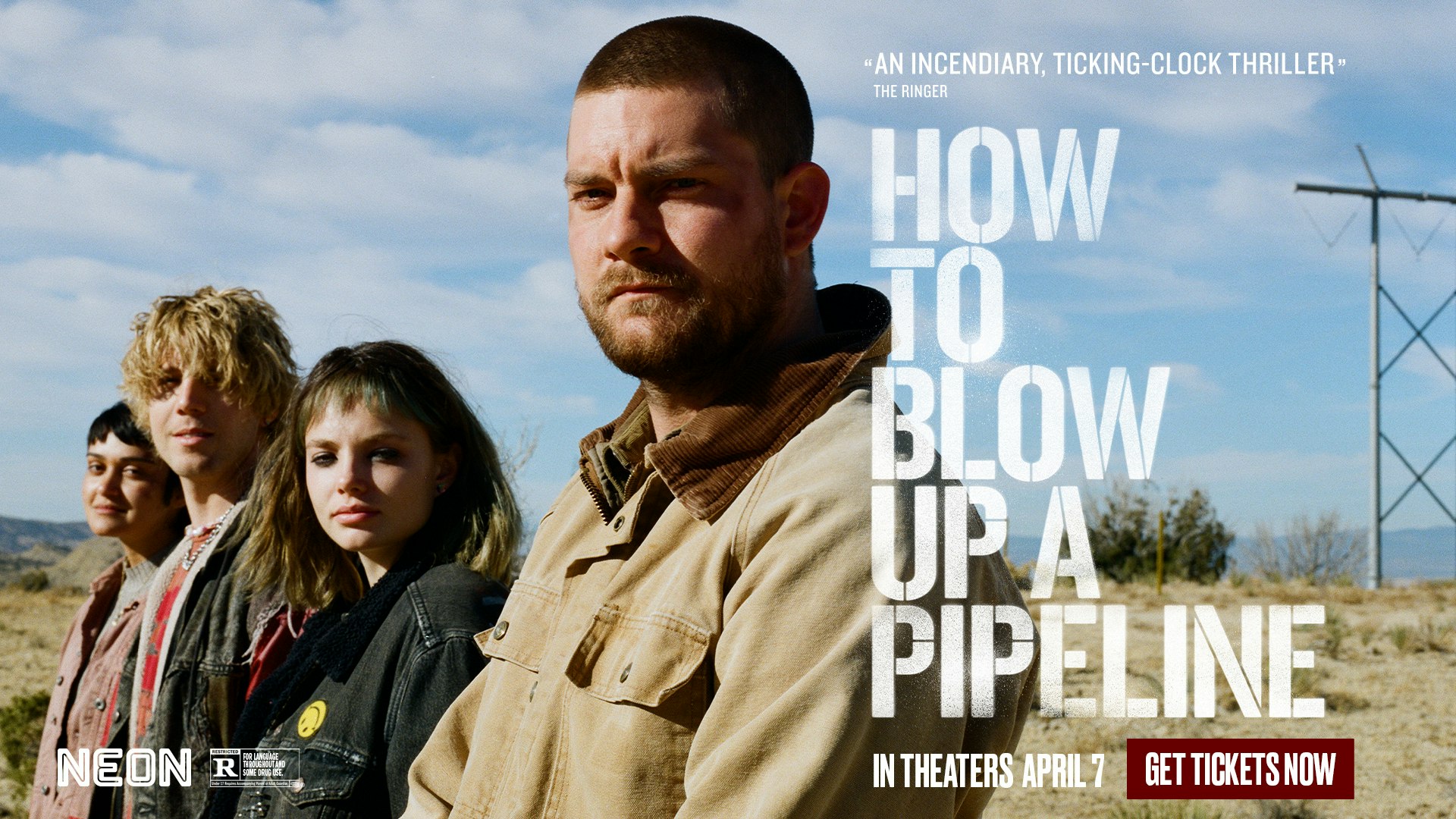
Yet that’s what The Times did when it reviewed a movie released this month titled “How To Blow Up A Pipeline,” running it with the headline, “Will We Call Them Terrorists?”
Favorable Reviews
The movie’s plot follows a couple of young environmentalists living in modern Long Beach, California.
One of their mothers dies in a heat wave, which apparently couldn’t be prevented with air conditioning for some reason. Despite the fact that deaths from climate-related natural disasters are down 98% since 1920, according to the nonpartisan International Disaster Database, the activists in the movie decide to blow up an oil pipeline in West Texas.
The movie has received a number of favorable reviews that gloss over the ethical questions of terrorism, with Rotten Tomatoes giving it a 95% score. Audiences score the movie at 71%.
New York Times reviewer Peter C. Baker tries to answer the ethical questions surrounding the characters’ actions by pointing out that Martin Luther King Jr., once on the FBI watch list, is today “an American hero.”
How the civil rights leader compares to a couple eco-terrorists blowing up a pipeline carrying oil, which supplies 80% of the globe’s energy needs, Baker doesn’t explain other than to invoke the specter of a warmer world.
He also seems to accept the movie’s premise, which glorifies that a reasonable response to climate change is to commit acts of terrorism.
“Decisions we are making right now are determining not just how much hotter and more polluted the world gets, but also how prepared future generations will be to live in the hotter, more polluted world we leave them,” Baker writes in his review.
Oblivious
State Rep. John Bear, R-Gillette, told Cowboy State Daily that the movie, as it’s being described, is reflective of an ignorance of energy.
“If people realized that every plastic thing that they use is made from fossil fuels they would realize we just cannot move away from fossil fuels,” he said. “I would venture that all those people that are doing the actual protesting have no idea exactly what fossil fuels are used for.”
The protagonists in the movie’s trailer are shown driving a gas-powered van, wearing clothes made from oil and wiring explosives coated in plastics — apparently oblivious that these things wouldn’t exist without coal, oil and gas.
Infrastructure Resiliency
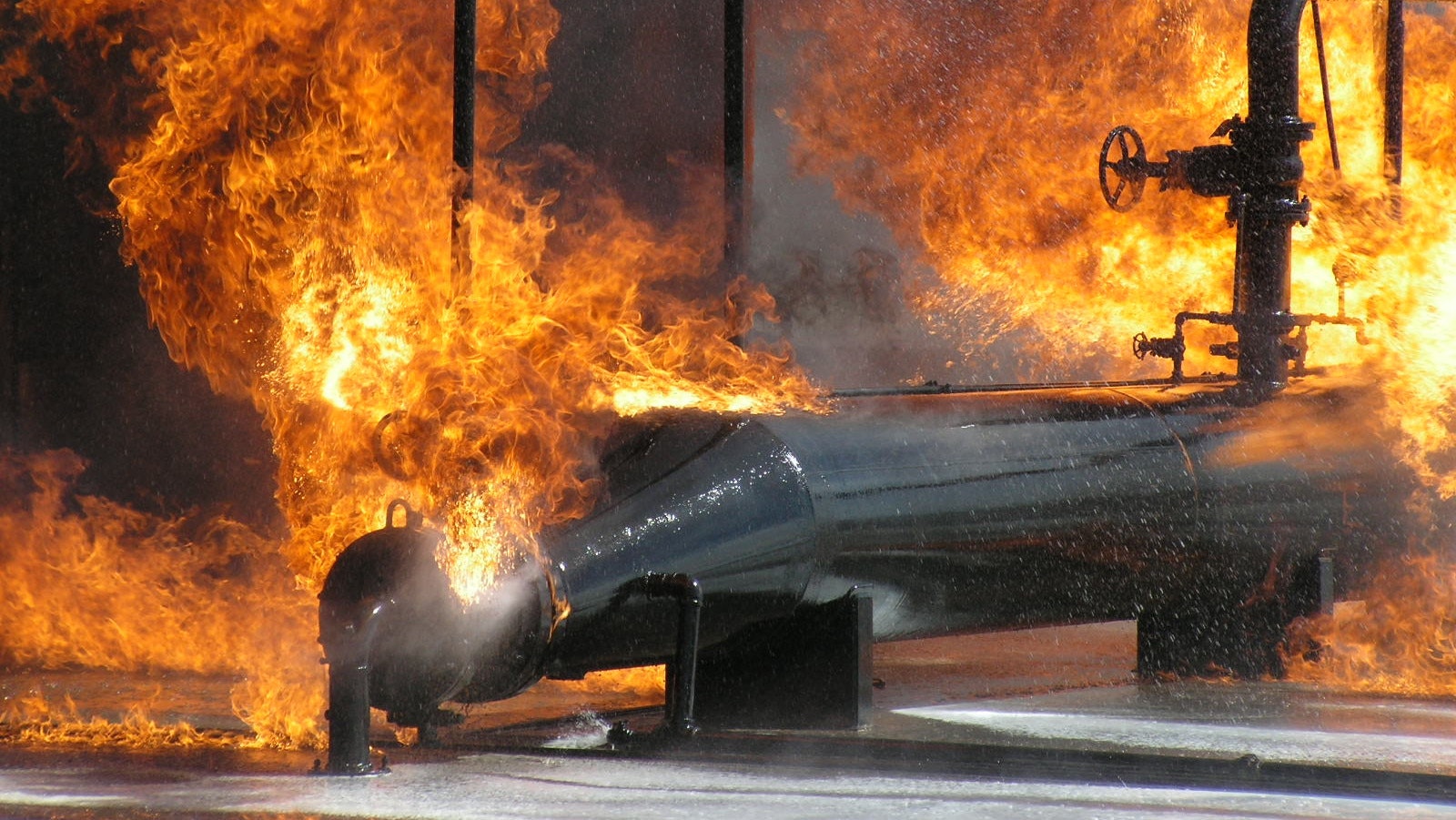
Concern for terrorism against infrastructure has increased considerably in the past few years because of a number of high-profile attacks on electrical infrastructure.
Most of those had nothing to do with climate activism, but one man admitted to shooting up a Utah substation in 2016 in an effort to bring attention to climate change.
In the last Wyoming legislative session, Bear introduced a bill that would have created an initiative for Wyoming’s critical infrastructure resiliency. The goal was to create a board that would explore options for the protection of critical infrastructure in Wyoming, including electrical.
The bill, Bear said, covered everything from eco-terrorism to blackouts during inclement weather.
“All these things need to be taken a look at because they put every single citizen in jeopardy,” Bear said.
The bill died in committee, but Bear said he’ll continue to pursue similar legislation in the future.
Here’s Your Villain
Colton Moyer, a Denver-based director, cinematographer and motion graphic artist, told Cowboy State Daily that the appeal of violence is often part of a simple narrative used by people calling for militant action. They display the world as being threatened by a defined target.
“They manipulate people by saying, ‘Look at how awful the world is. Here’s your villain,’” Moyer said.
Moyer was hesitant to criticize “How To Blow Up A Pipeline” since he hadn’t seen it.
He said there’s often a lot of nuance in such films that cause outrage based on a trailer and synopsis.
“The Monkey Wrench Gang by Edward Abbey,” written in 1975, tells the story of a group of eco-terrorists whose ideology is very similar to the protagonists in “How To Blow Up A Pipeline.” The book, however, portrays the characters as conflicted and flawed, and there’s a degree of self-reflection of their actions.
Whether there’s any nuance in “How To Blow Up A Pipeline” isn’t certain.
The movie is based on a 2021 manifesto by the same title written by a Swedish activist, Andreas Malm, who arguesthat vandalism and destruction of property are justifiable actions in the name of climate change.
“If the American empire calls us terrorists, then we’re doing something right,” says one of the characters in the film.
Dual Standard
Moyer co-wrote and directed the independent documentary “A Climate Conversation,” which questions if climate change will produce the kind of apocalyptic scenarios that many climate activists have come to believe in and if their green energy transition is rational of feasible.
It also explores the challenges and costs involved with replacing fossil fuels, which the scientists and engineers it features argue are technologically infeasible, based on energy illiteracy and bankrupting.
Finding distribution for the film has been a struggle, and it’s unlikely The New York Times will be writing any review of it, much less one as favorable as it gave “How To Blow Up A Pipeline.”
“There would be a definite dual standard here,” Moyer said. “I highly doubt we’ll ever live in a world where the Hollywood voices will give critical acclaim to anything that disagrees with their worldview.”
Moyer said the world of filmmaking has a lot of avenues now that didn’t exist in the past. With crowdfunding and online streaming, there are a lot more opportunities for other perspectives to get heard.
“I’m really encouraged,” Moyer said.
Responsible Speech
Much of the activities of anti-fossil fuel groups like Just Stop Oil and the Extinction Rebellion have been limited to blocking traffic, throwing soup on classic works of art and gluing their hands to pavement.
So far, none of it has risen to the level of using explosives to destroy infrastructure, nor has it spread beyond coastal cities and Europe.
“Hopefully, that’s not something we see in the State of Wyoming,” said Tyler Lindholm, state director for Americans for Prosperity in Wyoming and a former state lawmaker
Lindholm told Cowboy State Daily that the possibility of eco-terrorism might worry many in Wyoming, but he doesn’t think legislation enhancing penalties for such acts would do much good.
He said that it’s unlikely to be a deterrent, and the types of urban youths who are drawn to such acts of glory are unlikely to come all the way out to the middle of Wyoming to attack infrastructure here.
He also said he’s supportive of free speech, but that doesn’t mean that people shouldn’t take it upon themselves to police what they say.
“That movie should be able to be produced, but there's an individual responsibility that also comes along with it, not just to the news media, but to the individuals perpetrating that kind of violence,” Lindholm said.