A legal dust-up between some landowners and the Teton County government over “wildlife-friendly” fencing could have state-wide implications for farmers and ranchers, an agriculture advocate said.
“Teton County is kind of an outlier. It does have some idiosyncrasies that we don’t see in other counties. But many times we have seen something from one county start to take hold in other counties,” Wyoming Farm Bureau spokesman Brett Moline told Cowboy State Daily.
Wildlife conservation advocates have also expressed alarm over the possible implications of a lawsuit filed against Teton County by a Texas couple, Richard and Kimberly Rathmann, who own property there.
Different Sides Of The Fence
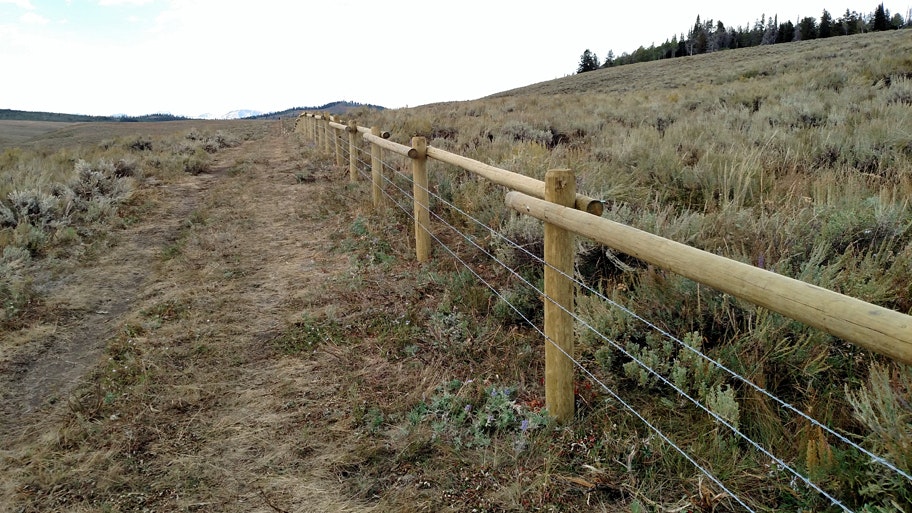
At issue is whether a county ordinance requiring wildlife-friendly fencing in Teton County is justified. That’s fencing that allows animals such as deer and antelope over or under it more easily.
The Rathmanns claim the ordinance represents government overreach, insofar as it’s trying to dictate what property owners can do with their land. They’re also claiming wildlife-friendly fencing won’t adequately contain horses.
The county claims the ordinance is necessary for wildlife conservation.
The Wyoming Game and Fish Department encourages wildlife-friendly fencing in some areas, Pinedale region terrestrial habitat biologist Troy Fieseler told Cowboy State Daily. But the agency steers completely clear of any legal controversies.
Instead, Game and Fish works cooperatively with landowners, conservation groups and others to ensure that wildlife has safe passage, particularly along herd migration corridors, he said.
From an agricultural perspective, mandating wildlife-friendly fencing could have terrible consequences, because such fences can also be easy for livestock – particularly calves – to get through, Moline said.
And that could cause a real mess this time of year, when calving season is ramping up, he said.
“The last thing you want is for a young calf to get on the wrong side of the fence and get separated from mama,” he said.
No Problem With Wildlife
Farmers and ranchers have no beef with wildlife, Moline said, and are generally more than happy to help with conservation efforts.
“I just can’t emphasize enough how important wildlife is to farmers and ranchers,” he said. “We love seeing them, we try to manage for them, we try to keep the range healthy for them.”
But conservation should come through cooperation and voluntary good will, not through the force of law or ordinance, Moline said. And a landowner’s circumstances must be taken into consideration.
“One of the problems with wildlife-friendly fences is that can be livestock-friendly too,” he said. “If you keep that top wire too low, the stock animals will cross it too.”
Fence In/Fence Out
Wyoming is “fence out” for cattle and “fence in” for sheep, he added, while the policy with horses remains a gray area.
That means landowners are responsible for fencing out their neighbors’ cattle, but must fence in their own sheep, he said.
“The idea was, you herded sheep and kept them close to home, so you should have to fence in your herds,” Moline said. “Whereas cattle are free-ranging, so you are responsible for fencing them out.”
Sturdy fences capable of keeping cows at bay are especially important in parts of Wyoming where there is “intensive farming,” Moline said.
“If I was growing corn, I sure wouldn’t want my neighbor’s cattle getting in there and eating it,” he said.
In many areas, adjacent landowners will split the costs of building and maintaining fences, he added.
So, livestock owners must have a say in any decisions regarding fences, rather than being forced to meet uniform legal standards, Moline said.
“So many times, we try to find a one-size-fits-all solution. And those don’t work,” he said. “It works best when wildlife groups, landowners and Game and Fish sit down together and work things out.”
Good Fencing Vital To Conservation
Fieseler agreed it’s best when stakeholders cooperate.
“Here in the Pinedale-Sublette County region, landowner cooperation has been a pivotal part of wildlife-friendly fencing,” he said. “I think everybody agrees that fences are also an important element of livestock ownership in our state.
Fences can disrupt major big game migration routes between the herd’s summer and winter ranges, he said. And they can also hamper the animals’ “daily movements” between feeding and bedding areas, or to watering holes.
“Fences can increase stress on wildlife as they try to figure out how to navigate them,” Fieseler said. “They can lead to injury and death” if animals get entangled in them.”
In an instance that illustrated that point, some landowners came along just in time last fall to save a buck antelope that had gotten entangled in a barbed-wire fence near the Wyoming-South Dakota state line.
Built For Safe Passage
One effective wildlife-friendly fence design is a strand of smooth wire on the bottom, with three strands of barbed wire above it, Fieseler said.
Those fences have a maximum height of 42 inches – allowing elk and deer to jump over them, he said. They also have 12-inch gaps between the top two wires, as well as a 16- to 18-inch gap between the ground and the bottom wire, allowing antelope to crawl under.
“Antelope tend to want to crawl under fences,” he said. “I’ve seen antelope jump fences, but they seem pretty reluctant to do so.
Some fences can be outfitted with “drop clips”, so the heights of the wires can be easily adjusted, Fieseler said. That allows ranchers to lower wires during peak wildlife migration periods, and then raise them back up once game herds pass.
Brightly-colored flagging can also be attached to fence wires, making them more visible to wild creatures, he said. That’s particularly important for sage grouse.
“Sage grouse are low flyers. If a fence is hard to see, especially in low-light conditions, they can fly right into the wires, which often results in death,” he said.